

If you’re researching the salon suite business model, you’re probably asking a real question: Is this actually a smart way to build a real business, or just another version of working under someone else?
For a lot of hairstylists, barbers, nail artists, estheticians, lash artists, and other Lifestyle Professionals, it’s a real business path. According to the U.S. Bureau of Labor Statistics, nearly 48% of hairdressers, hairstylists, and cosmetologists are self-employed. The same category is projected to grow 5% from 2024 to 2034, with about 84,200 openings each year.
Independence is already how a large portion of the beauty industry operates. The salon suite concept fits that reality. It gives beauty professionals a private salon space, real control over pricing and scheduling, and a cleaner way to build their brand, without reporting to anyone else.
When that model is backed by a company built around independence — such as Phenix Salon Suites — the transition often becomes more structured and easier to navigate.
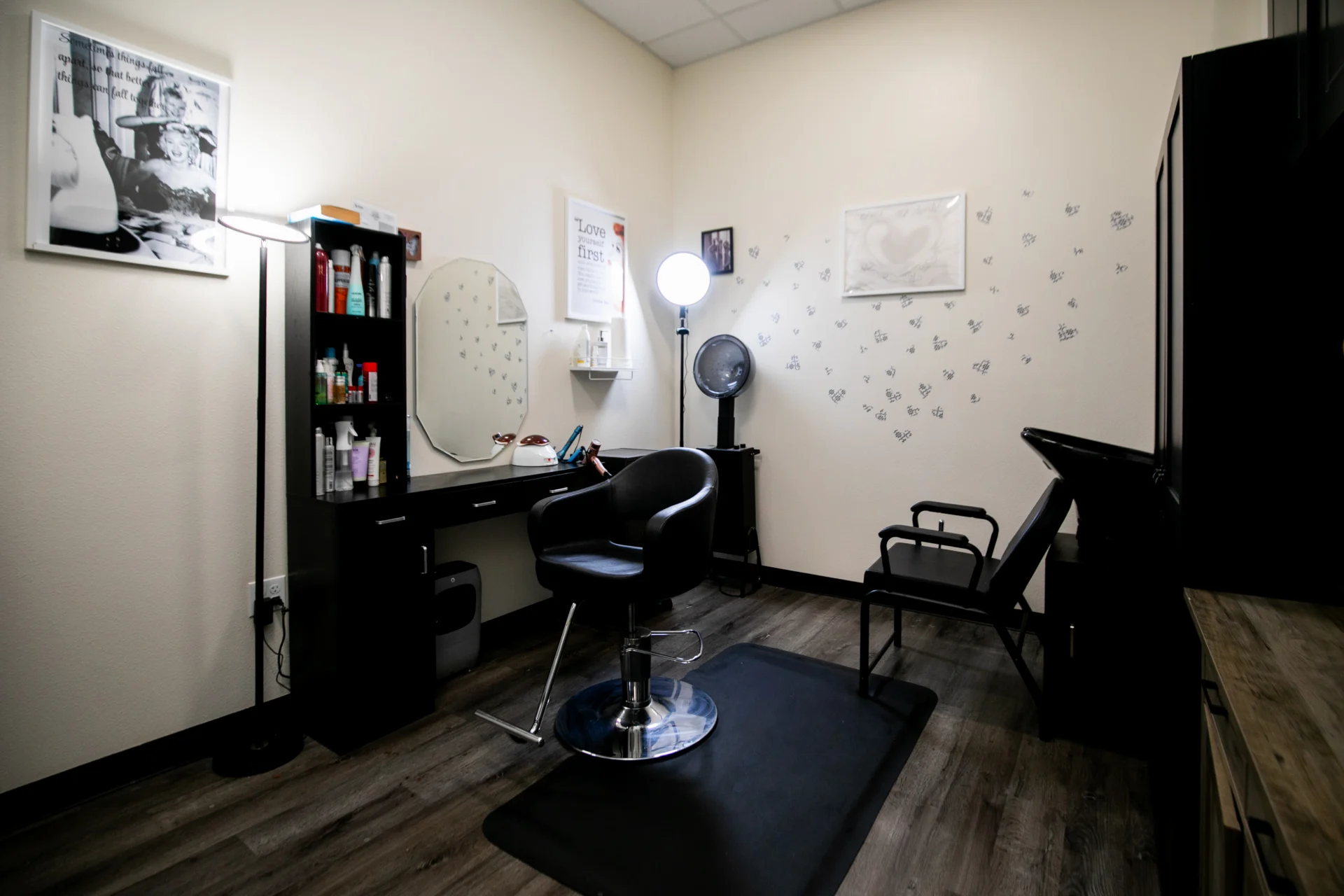
What is a salon suite business?
A salon suite business model is a structure where independent beauty professionals operate their own business from a private salon space within a larger salon suite location, maintaining full control over pricing, services, branding, and scheduling.
Here’s what that actually looks like in practice. Your suite has its own door and entry. Clients come to your space — not a station in someone else’s salon. You set your hours. You control your booking. You’re not coordinating around another business’s schedule or policies.
What you manage inside that space:
- Your services and how you price them
- Your schedule, down to the hour
- Your brand and how the space looks
- Your client relationships — fully
The building has other independent businesses in it. That’s true. But you’re not sharing an open floor with them, splitting time on a chair, or working under their name. You’re running your own operation. It just happens to be inside a building designed for exactly that.
How the salon suite business model works
Day to day, the structure is pretty straightforward. You work from your own private salon space, set your own hours, manage your own client list, and build a business under your name. You’re not adapting to someone else’s systems — you’re creating your own.
What that actually gives you:
- Your service menu is yours to build
- Your pricing reflects your skill and your market
- Your client atmosphere fits the experience you want to deliver
- Your schedule works around your life, not a salon’s floor plan
A lot of professionals also find that a salon suite creates a cleaner path into ownership than they expected. Rather than starting from an empty location, many choose a ready-to-use space that includes basic equipment and a structure already built for independent businesses. That removes a lot of friction up front and lets you focus on clients, systems, and growth from day one.
How the investment works
You keep what you earn. No commission split, no house percentage. Your pricing is yours — which means revenue grows when your skills and client base grow, not when a salon decides to adjust the structure.
Where your income comes from:
- Services you perform
- Add-ons you choose to offer
- Retail you carry — the full margin is yours
The equipment, insurance, and booking tools are things most independent professionals have to source and pay for separately. Phenix includes them in your weekly fee. That’s a real difference in startup overhead — and it matters most in the first few months when you’re still building your book.
What actually moves your income over time: average ticket, rebooking rate, and retail. Those numbers belong to your business. Not a salon’s bottom line.
When the salon suite model feels like the right solution
The salon suite model fixes most of what frustrates professionals working inside traditional salon structures. Here’s what shifts when you make the move:
- Real independence. You control your hours, your policies, and how your business runs day to day.
- Brand ownership. Clients connect the experience directly to you, not a larger salon brand.
- A private client environment. Appointments feel calmer, more personal, and more intentional.
- Pricing freedom. You set rates around your skill, your demand, and your goals.
- Visible business growth. Every improvement in retention, average ticket, and referrals goes directly back to your business.
Unlike traditional booth rental arrangements, a salon suite gives you a complete private space rather than a single station inside another brand. That difference changes how clients see you. They’re not coming to a salon that employs you — they’re coming to your business.
Clients often respond well to that private setting. Consultations feel more focused, appointments move at your pace, and specialists can build an environment that fits the services they offer. For many professionals, that leads to stronger retention, better rebooking habits, and a more consistent experience overall.
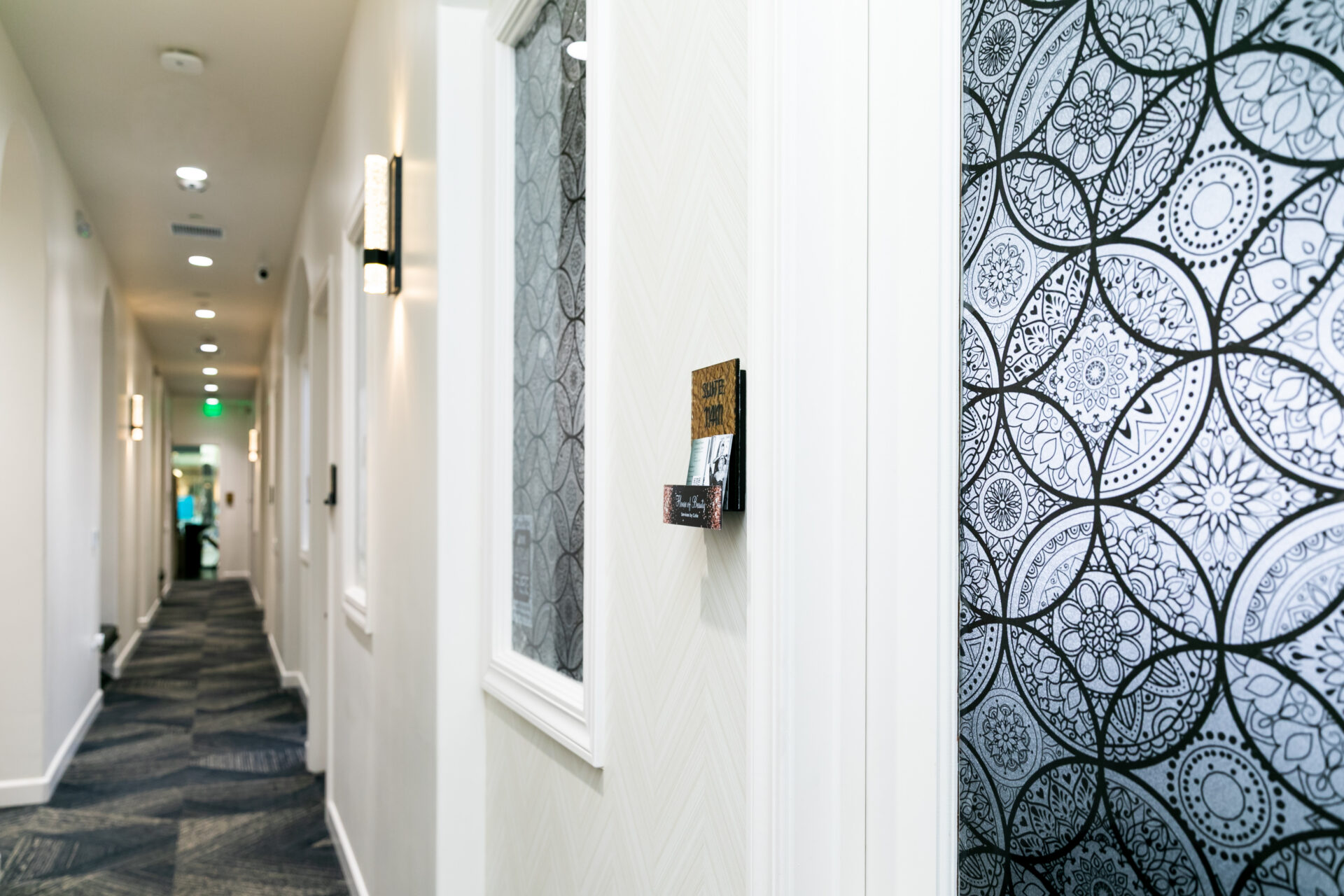
Why the salon suite business model is growing
The short version: more beauty professionals want flexibility, and the salon suite model delivers it in a way that other structures don’t.
Salon suites give professionals the ability to:
- Set their own hours and take control of their schedule
- Build client relationships on their own terms
- Price services to reflect their skill and market
- Grow income without waiting for a commission structure to catch up
The model also removes a barrier that stops a lot of talented professionals from going independent — you don’t have to open a full salon operation from scratch. A salon suite is a natural next step. You get the independence of ownership with a structure that’s already built for it.
The numbers back this up. Self-employment levels in the beauty industry — especially among barbers — have been climbing for years. This shift is also reflected in the continued expansion of salon suite locations across the U.S., with major brands rapidly increasing their footprint to meet demand from professionals ready to make the move.
Is the salon suite business model right for you?
Start with a simple question: Do you want more control over your time, your pricing, your environment, and your client experience?
If the answer is yes, the salon suite model is worth a serious look. It’s especially strong for professionals who already have steady rebooking or a clear specialty.
A salon suite is a business framework. It gives you a private salon space, stronger ownership over your brand, and a more direct path to building something clients recognize as yours. If you’re ready to explore what that could look like in practice, start by exploring available salon suites near you.
Why Phenix? Here’s what sets us apart.
Ready to break out on your own? Phenix Salon Suites has been creating private salon spaces for independent beauty professionals for over 15 years.
Here’s what we bring to the table:
- Private salon spaces designed for independent beauty professionals — your space, your brand, your rules
- Complimentary education to help you sharpen skills and stay current
- Business development tools so you’re not figuring it all out on your own
- Product discounts that help manage your supply costs
- A community of 15,000+ Lifestyle Professionals across the Phenix network — real peers who understand the independent path
- Locations nationwide so you can find a Phenix near you and explore the space before committing
Phenix was built for you, by someone who lived the same frustrations. Founder Gina Rivera created the Phenix model after experiencing the limitations of the traditional booth rental system firsthand. She designed Phenix to give independent professionals something the old structure never did: a private space, full ownership of the client experience, and a business that’s actually theirs. That background shaped the company’s focus on environments where independent beauty professionals can actually build something lasting.
Not sure where to start? These two resources walk you through the practical side of making the transition: The salon suite business plan guide and the opening a salon suite checklist are good places to start.
Both help you think through pricing, scheduling, client management, and the day-to-day operations that come with running an independent beauty business.
FAQ
What is a salon suite business model?
A salon suite business model is a structure where a beauty professional runs their own independent business from a fully private, dedicated space — their own entry, their own schedule, their own brand — within a building designed specifically for independent beauty professionals. Unlike a shared salon floor, there’s no overlap with other businesses. Each suite is its own operation.
How much do salon suite professionals make?
Professionals keep 100% of their earnings. Actual income depends on pricing, schedule, and hours worked. Because you set your own rates and control your own book, income typically grows as your client base builds — and there’s no commission structure capping what you take home.
Why are salon suites becoming more popular?
Salon suites give beauty professionals the flexibility that traditional salon structures don’t. You control your schedule, your client experience, and your rates. That flexibility creates a more direct path to higher income and a business that works around your life — not the other way around. For many professionals, a salon suite is also the most natural next step out of commission or employee-based work without having to open a full salon from scratch.
What do you need to start working in a salon suite?
Requirements vary by state and local market, but beauty professionals generally need to hold the appropriate license for the services they provide.
Is Phenix a good fit for someone exploring the salon suite model?
Phenix is a strong fit for professionals who want a private salon space and a clearer path into independent business ownership. The company combines salon suites with educational resources, product discounts, and a community of Lifestyle Professionals. With locations nationwide, there’s likely a Phenix close to you — which makes it easy to explore the space in person before committing.
How much does a salon suite cost?
Cost varies by city, suite size, and location within a building. Professionals should also factor in operating expenses such as supplies, products, and scheduling software when mapping out their overall business costs.